Creating Choices for Consumers and Online Global Communities
Introduction
In societies where technology, social media, and streaming services are easily accessible, the cult phenomenon SKAM [2015-2017], a Norwegian web drama, acts as an example of how multiple forms of media can be used together to engage audiences. The series illustrates the strengths of transmedia storytelling and its ability to secure audiences by offering additional content, multiple ways to watch a show, and devoted internet fanbases. In this text, transmedia refers to “The relationship between several platforms that together present a fictional world” (Bengtsson 2018, p. 65). Additionally, future series could use SKAM as a guide when experimenting with transmedia, real-time, and traditional storytelling in order to have greater appeal to online, diverse global audiences.
SKAM’s Format and Story
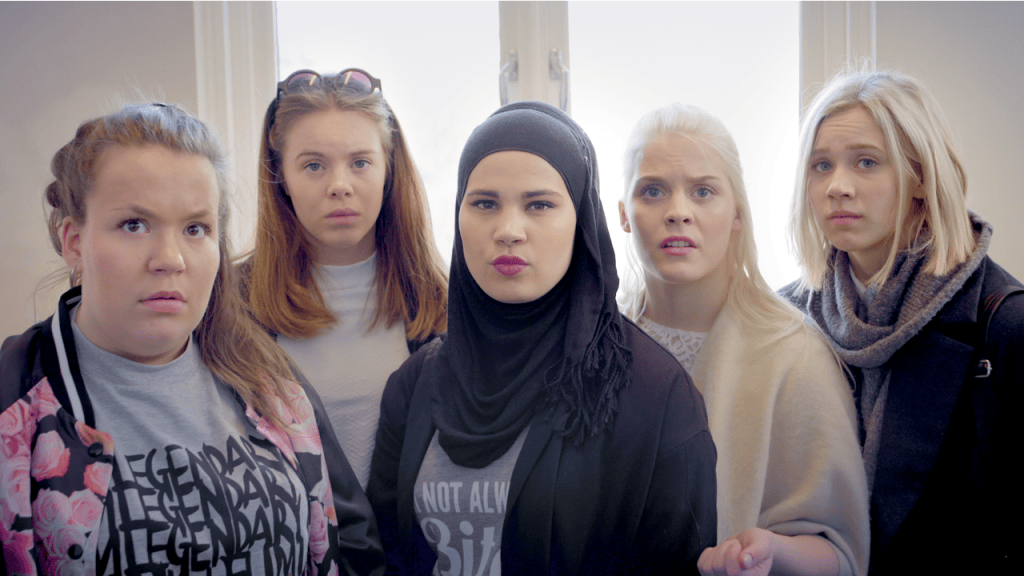
The Norwegian web serial SKAM (“Shame”) directed and created by Julie Andem had four seasons, running from 2015 to 2017 (Andersen 2019, p. 84). It was broadcast on Norwegian Broadcasting Corporation’s (NRK) website, a public service (Bengtsson 2018, p. 63). Around 2010, NRK was struggling to keep young consumers engaged, so they aimed to produce content that would appeal to teen viewers (Andersen 2019, p. 98). Soon SKAM, an online drama specifically targeting teenage girls, was released (Bengtsson 2018, p. 63). The series focuses on the lives of a Norwegian friend group as they navigate high school. Each season follows a different main character from the friend group and tackles different issues in their life. In season one, Eva was the lead. The first season introduced viewers to the core group, their interpersonal relationships, and followed Eva as she broke up with her boyfriend and made new friends. Season two gets more serious as attention focuses on Noora, touching on topics of eating disorders, sexual assault, and the influence of social media. SKAM’s third season quickly became its most popular and won the series two Gullruten awards (IMDb) as the show followed Isak, a boy coming to terms with his sexuality (Andersen 2019, p. 99). The third season also considered issues of drug abuse, mental illness, and homophobia. Finally, the fourth and final season trained the camera’s eye on Sana, a Muslim girl who struggles with balancing friendships, family, religion, and the outside world. The season explores views on race, battling beliefs, and the dangers of the internet. While each season has a unique plot, audiences can count on messy romances, emotional highs and lows, and characters making regrettable decisions. In essence: a classic teen drama. However, SKAM’s content design and structure manages to set itself apart.
SKAM used traditional, transmedia, and real-time storytelling to captivate audiences. Instead of releasing content at once, NRK would post short video clips on their website, typically 3-15 minutes long, throughout the week (Andersen 2019, p. 91). These brief videos were released in “real-time,” meaning that when the clip was broadcast was also when the character was experiencing said event. For example, a video with a title screen naming the day and time, such as ‘TORSDAG: 21:21” (Thursday 21:21) would be released on Thursday at 9:21 pm. On Friday, all the clips from the week would be combined to create one full episode, which NRK would also publish online. Additionally, on the official webpage skam.p3.no, extra material like text messages between characters, YouTube videos made by characters, Instagram updates, emails, etc. would be posted (Andersen 2019, p. 98). In fact, most characters in the series had an Instagram account that would be updated semi-regularly throughout the season. This type of transmedia storytelling would later prove to be one of the keys to SKAM’s success.
When SKAM reached its final episode, it was one of the most popular series in Norway and was almost as popular in Sweden (Bengtsson 2018, p. 68). Even after SKAM’s second season, a survey found that with teens between 15 and 19 years old, 98% knew about the show and more than 67% had seen the show (Hornmoen 2022, p. 3). Again, this was before the release of the series’ most-watched third season. SKAM would also receive global attention when dedicated, tech-savvy fans began translating content, adding their own subtitles, and posting videos on websites that were not geo-blocked for international viewers. The fanbase took on a life of its own, creating online communities and demand for similar transmedia content. One online Facebook group devoted to SKAM would even pass 78,000 members (Andersen 2019, p. 98). As a matter of fact, shortly after the series’ final episode, other countries launched their own SKAM remakes. At present in 2022, there are seven remakes: SKAM France [2018-present], DRUCK [2018-2022] from Germany, SKAM Italia [2018-present], SKAM Austin [2018-2019] from the U.S.A, SKAM NL [ 2018-2019] from the Netherlands, SKAM Espanña [2018-2020] from Spain, and wtFOCK [2018-2021] from Belgium (Sundet 2020, p. 72). DRUCK, SKAM France, and SKAM Italia were the first remakes created and are still releasing seasons in 2022.
While SKAM’s basic storyline is entertaining, it is not revolutionary compared to other teen-centred shows. What made the series a triumph, and continues to make the remakes successful, is the transmedia, real-time structure. Producing supplementary content online, taking advantage of social media, and posting videos in real-time made SKAM effectively capture the attention of teens. Moreover, by having an initial audience composed largely of digital natives comfortable navigating various forms of media, the series had a fanbase who knew how to spread and share content globally. SKAM’s accomplishment illustrates the potential of transmedia storytelling, the advantages of offering agency in how audiences consume content, and in the influence of global online communities.
SKAM’s Transmedia and Real-Time Storytelling
While the exact platforms a production uses in transmedia storytelling can vary, the end result should be a cohesive story. An additional rule in transmedia storytelling is having a main location or platform where audiences can easily access most, if not all, of the story. “The various platforms contribute different things, depending on what they are best suited for, but together, they create a larger, coherent fictional world that expands across multiple platforms” (Bengtsson 2018, p. 65). SKAM achieved this by not only having a website hosted by NRK and updated daily, but the videos produced had all critical information needed to follow the story. If seen, other content like Instagram posts and text messages would support and enrich the story but not provide any information you could not understand the show without. This gave audiences a choice in which platforms they wanted to engage with and how invested they were in participating with the media. Furthermore, episodes released at the end of the week were more similar to traditional series and could attract certain, likely older audiences, while multimedia aspects would interest other, younger audiences and aid NRK’s youthification.
The television industry’s pursuit to reach and captivate young audiences is known as youthification (Sundet 2021, p. 146). Some notable qualities of this demographic is that they grew up in a digital era, have hundreds of shows, services, and platforms a day battling for their attention, and fewer of them are consuming media linearly (Krauß 2021, p. 413). Fortunately, “SKAM’s real-time approach promised a fruitful way of combining television and online media, of linear and non-linear distribution to reach teenage audiences’ ‘ (Krauß 2021, p. 414). Real-time releasing of clips made viewers feel close to the characters, living at the same pace as them. Time between clips mimics real life, and audiences endured the space between events. Worries, anxieties, or excitements mirrored the characters since they were experiencing it alongside them. Anyone could follow character social media accounts like they would a friend and updates were spontaneous – no warning given ahead of time. SKAM even followed the natural week and semester of a teen, with Fridays culminating in a big event, characters stressed about school when real high schoolers were taking exams, and including holiday celebrations as they neared the real world (Andersen 2019, p. 92). Current events and trends were easily added in, making it more relevant when released than nearly any other show. For instance, during season four the show mentions a terror attack in Manchester merely one day after it happened (Andersen 2019, p. 95). Also, the constant updates were short enough to be viewed during a busy day, could be accessed on mobile devices, and hooked audiences with social media tactics (Bengtsson 2018, p. 102). For example, current events, constant updates, and ways to comment and engage kept it on the audience’s minds throughout the day and became a topic of discussion. The participatory practices of transmedia storytelling awarded SKAM audiences a further incentive. “Transmedia narrative is a type of aesthetic, dependent upon the consumer themself participating in creating fictional worlds. By actively searching for pieces of the story on different platforms and participating in online-based discussions with others, a richer entertainment experience is acquired” (Bengtsson 2018, p. 65). Audience members who invested more time participating in the digital world were rewarded with more content that related to the story and characters.
In general, SKAM’s transmedia and real-time format added a further layer of realism, addictive qualities, and was critical in SKAM’s youthification. However, SKAM’s true victory was in its balance of both transmedia/real-time elements and traditional television formats like a stimulating plot, common tropes, and easily accessible episodes. The initial target audience for SKAM was 16-year-old Norwegian girls (Andersen 2019, p. 92). Thus, three of the four seasons focused on high school girls and issues they would likely relate to (body image, relationships, school stress, etc.). Roles were played by actors near the character’s age, like season three’s lead Isak Valtersen played by Tarjei Sandvik Moe who attended the high school where filming took place (Rettberg 2021, p. 238). It was also revealed in behind-the-scenes videos from set, that SKAM’s creators consulted the young actors on how to make content realistic (Norsk Skam Bloopers – Season 1 and 3). This would include character development, interactions, expressions, and dialogue. Footage shows the actors and directors rewriting scenes during shooting and brainstorming how to develop the story naturally. They aimed at seeing the world through their perceived audience’s eyes, constructing conversations and interactions that awkward, impulsive teens would actually have. These production decisions provided SKAM with a solid foundation, giving it a well-thought-out, relatable storyline with compelling characters. From there, transmedia and real-time devices simply supported the plot and audiences could individually choose how to engage.
SKAM’s Audience Autonomy: Choosing How You Watch
The transmedia and real-time format of SKAM and traditional series aspects provided audiences with options on how they wanted to watch the show. This choice could be influenced by the age of the viewer, their lifestyle, and their initial motives for watching. A study investigating the theory of uses and gratifications and its relation to SKAM, found two different types of viewers and several types of online media participatory practices (Bengtsson 2018, p. 67). First, there were traditional viewers who would wait until the end of the week to watch the whole episode at once. Reasons given for this included a dislike of watching content on the phone, feeling like small clips were confusing and spoiled the story, and that it was too easy to forget to check for updates (Bengtsson 2018, p. 70). Interviews with this type of viewer found that “coherence and anticipation” were their main considerations (Bengtsson 2018, p. 70). On the other hand, there were real-time viewers. To them, gathering and watching content in order when first released was ideal. They could check their notifications, access content on their phones, watch on the go or during breaks in the day, and immerse themselves in the story. Interviews with this type of viewer found that a “sense of reality and focus” were key charms (Bengtsson 2018, p. 70).
The participants were separated again when it came to engaging with content on other platforms and online participatory practices. Some would go through posts, pictures, and texts throughout the week as they were updated, some would save it until the end of the week, and others would ignore the content or not care either way when/if they saw it (Bengtsson 2018, p. 70). In terms of involving themselves in online content, the majority would not engage (meaning they would look but not post), a smaller group would like or dislike posts, and even fewer would go on to comment. Even then, comments ranged from “paradigmatic comments to syntagmatic comments” (Hornmoen 2022, p. 3). However, all participants emphasised a need for a central platform (Bengtsson 2018, p. 73). They also agreed that the video content was crucial while other content was supplementary, yet none questioned the use of any of the platforms even if they opted out of one and stated that each element played a role in forming the story (Bengtsson 2018, p. 73).
Audiences had autonomy and were able to pick and choose how they followed the plot. Even then, the decisions a viewer had to make did not end with the episodes themselves. Audiences could also select which additional platforms and media they engaged with. If audiences did decide to dive into the online world of SKAM Facebook groups, Instagram accounts, and various online circles they would have to choose how to interact with fan-produced content. Mainly, what role they would play in participatory culture: whether to like or dislike, comment or read comments, think critically or keep interactions surface-level. Although SKAM used transmedia/real-time storytelling techniques, the show did not abandon all traditional series formats. Therefore, traditional viewers, real-time viewers, digital natives, social media butterflies, etc. could find their ideal structure.
SKAM’s Globalisation: Online Communities
When originally released, NRK did not plan for SKAM to have any global audience and was produced on a small budget with Norwegian as the only language. It was a “secret online teen drama turned global cult phenomenon” (Sundet 2020, p. 69). What began as young fans organising in-person watch parties and talking about the series amongst friends turned into a show watched on all continents by all ages. However, this worldwide reach was not accomplished by NRK – who had neither the means nor motive to do so – but was spread by fans. As addressed by Vilde Schanke Sundet from the University of Oslo:
Several studies have addressed the emotional investments of fans and how sharing these emotions with others drives the creation of fan spaces…The fact that the show was in Norwegian—a language spoken by just five million people—and released without official subtitles further illustrates the collaborative forces active within this fan base, as fans took upon themselves to share and translate SKAM content into various languages for one another. Many of the Scandinavian SKAM fan groups and fan activities were initiated by first-time fans who, over time, grew more experienced in their fan performances and better-connected to other fans and fandoms. (Sundet & Peteresen 2021, p. 2)
Fans not only translated content but created safe spaces for others around the world to view the videos. This included creating websites that were not geo-blocked, uploading videos and photos to Google Drive, and forming chatrooms to walk new fans through the set-up of the show. For example, the website All of SKAM, features fan made art, guides, and translated videos. With an online community focused on making SKAM accessible, new, foreign, and older audiences (who may not be accustomed to digital media) had a guiding hand as they enjoyed the series. By season three (SKAM’s and typically its remakes’ most popular season) producers had also gotten more creative with social media content. Going so far as to hide social media accounts, blogs, and YouTube videos that fans would scour the internet for. For example, the main love interest in season three, Even Bech Næsheim’s Blog Intervju med [2017] and YouTube video Gutten som ikke klarte å holde pusten under vann [2017] were not advertised in any way, yet hints and references in the show led fans to discover them. This gives something for fans to see and engage with, but also helps fans find each other. Of course, fans would help each other collect missing pieces. This illustrates transmedia storytelling’s skill at forming dedicated fan bases and active media participants. With so much content on a range of platforms, collaboration, commentary, and communities are naturally produced.
SKAM’s Transmedia Storytelling: Implications for Future Series
Overall, the employment of transmedia and real-time storytelling balanced with elements from traditional television made SKAM a celebrated show where audiences could tailor their viewing experience, discover online communities, and engage with content as they saw fit. Although SKAM was not originally intended for global audiences, the targeted demographic of the show was mainly digital native teens who helped make it accessible to those of any age, skill, and nationality. However, the full potential of transmedia storytelling has yet to be realised. Transmedia practices could help future series find similar success as new online platforms emerge and multimedia practices become more common across all ages, especially if intended for widespread appeal from the get-go. Presently, most series produced have intense marketing over many online platforms. Creating realistic real-time accounts for characters and releasing one episode per week could increase audience engagement with relatively little time, money, and effort on production’s side. Currently, shows like Heartstopper [2022-present], Young Royals [2021-present], Sex Education [2019-present], Never Have I Ever [2020-2023], and The Sex Lives of College Girls [2021-present] could all be used to test how SKAM’s techniques affect audiences when released from prominent global streaming services. They are popular shows centred around teens and young adult characters, taking place in the present, and concerning trending teen topics. In essence, they share similarities with SKAM’s main plot appeal and could incorporate transmedia storytelling and real-time storytelling along with their traditional television traits with little risk to their already established fanbase. Granted, this will not work for every series. Future shows looking to couple transmedia storytelling and real-time storytelling need narratives that take place in the present, updates would have to be more frequent and on trending topics, and more content would have to be produced. However, there is room for exploration when considering how future series can expand their following worldwide and let audiences tailor their viewing experience. Creating series that can be understood and consumed by watching the “traditional” way, yet also providing options for those who prefer a non-linear or multimedia experience.
Referenced Content
C. (2022). Welcome! All of SKAM. https://sites.google.com/view/alllofskam/home Last updated: 26 October 2022 [Accessed: 2nd November 2022]
‘DRUCK’ (Beck, P. et. al, 2018-2022, Germany)
‘Heartstopper’ (Oseman, A., 2022-present, U.S.A.)
‘Never Have I Ever’ (Kaling, M. & Fisher, L., 2020-2023, U.S.A.)
‘Sex Education’ (Nunn, L., 2019-present, England)
SKAM (2017). Intervju med: Even Bech Næsheim. prosjektblogg, https://web.archive.org
‘SKAM’ (Andem, J., 2015-2017, Norway)
‘SKAM Austin’ (Andem, J. & Bartell, P. J., 2018-2019, U.S.A.)
‘SKAM España’ (Álvarez, B. & Ayerra, J. R., 2018-2020, Spain)
‘SKAM France’ (Hourrègue, D. & Monsarrat, S., 2018-present, France)
‘SKAM Italia’ (Bessegato, L., 2018-present, Italy)
‘SKAM NL’ (Koek, B. & Lamberti, I., 2018-2019, Netherlands)
‘The Sex Lives of College Girls’ (Kaling, M. & Noble, J., 2021-present, U.S.A.)
‘wtFOCK’ (Goris, T., 2018-2021, Belgium)
‘Young Royals’ (Ambörn, L., Beckung, L., & Holter, C., 2021-present, U.S.A)
YouTube User: Art Vandeley (published 21st June 2017) Gutten som ikke klarte å holde pusten under vann, Available at: https://www.youtube.com/watch?v=UC9fh2zy6eI&t=5s [Accessed: 2nd November 2022]
YouTube User: Norsk (published 9th December 2018) Skam Bloopers – Season 1, Available at: https://www.youtube.com/watch?v=AggtsRCwMW8 [Accessed: 2nd November 2022]
YouTube User: Norsk (published 14th December 2018) Skam Bloopers – Season 3, Available at: https://www.youtube.com/watch?v=ZNsmiWjiExs [Accessed: 2nd November 2022]
Bibliography
Andersen, T. R., & Linkis, S. T. (2019). As We Speak: Concurrent Narration and Participation in the Serial Narratives “@I_Bombadil” and Skam. Narrative (Columbus, Ohio), 27(1), 83–106. https://doi.org/10.1353/nar.2019.0005
Bengtsson, E., Källquist, R., & Sveningsson, M. (2018). Combining New and Old Viewing Practices: Uses and Experiences of the Transmedia Series “Skam” Nordicom Review, 39(2), 63–77. https://doi.org/10.2478/nor-2018-0012
Hornmoen, H., Hågvar, Y. B., Hyde-Clarke, N., Fonn, B. K., & Stuedahl, D. (2022). Media narratives, agonistic deliberation, and Skam: An analysis of how young people communicate in digital spaces. Nordicom Review, 43(1), 1–18. https://doi.org/10.2478/nor-2022-0001
IMDb (unknown) SKAM (2015-1017) Awards, IMDb (online) Available at: https://www.imdb.com/title/tt5288312/awards/ [Accessed: 2nd November 2022]
Krauß, F., & Stock, M. (2021). Youthification of television through online media: Production strategies and narrative choices in DRUCK/SKAM Germany. Critical Studies in Television, 16(4), 412–432. https://doi.org/10.1177/17496020211044821
Rettberg, J. W. (2021). “Nobody Is Ever Alone”: The Use of Social Media Narrative to Include the Viewer in SKAM. Journal of Popular Culture, 54(2), 232–256. https://doi.org/10.1111/jpcu.13015
Sundet, V. S. (2020). From ‘secret’ online teen drama to international cult phenomenon: The global expansion of SKAM and its public service mission. Critical Studies in Television, 15(1), 69–90. https://doi.org/10.1177/1749602019879856
Sundet, V. S. (2021). ‘Youthification’ of drama through real-time storytelling: A production study of blank and the legacy of SKAM. Critical Studies in Television, 16(2), 145–162. https://doi.org/10.1177/17496020211005311
Sundet, V. S., & Peteresen, L. N. (2021). Ins and outs of transmedia fandom: Motives for entering and exiting the SKAM fan community online. Poetics (Amsterdam), 84, 101510. https://doi.org/10.1016/j.poetic.2020.101510
Research paper written for JAMS 3SA 01: Global Cinema
- This course was taken abroad at the University of Nottingham in England
- This was a research paper where students were tasked to analyze some aspect of global cinema/television
- This was one of three written projects I’ve done on the series SKAM during my undergraduate degree

